Ace Blinds Guide to Perfect Privacy at Home
Home should be the place where you can relax without feeling exposed to passing traffic, neighbouring properties or people walking nearby.
However, creating privacy at home is not always as simple as closing the blinds. If a blind blocks too much daylight, the room may feel dark and enclosed. If it allows too much light through, it may not provide the privacy you need—particularly after sunset when the lights are switched on inside.
The right solution depends on the position of the window, the room, the time of day and how much visibility you want to retain.
A ground-floor living room facing a busy road has different requirements from an upstairs bedroom. A bathroom needs dependable privacy and a suitable material. Patio doors require wide coverage without making access difficult, while a home office may need privacy combined with glare control.
Ace Blinds supplies and professionally fits made-to-measure blinds across Derry and the North West. This guide explains how to improve privacy without making your home feel permanently closed off.
Why Privacy at Home Depends on More Than the Blind
Every window has a different relationship with the outside world.
Before choosing a blind, stand inside the room and consider what can be seen from the pavement, neighbouring windows or surrounding properties. Then repeat the check after dark with the interior lights switched on.
This is important because privacy changes throughout the day.
During daylight hours, the outside of a home may be brighter than the interior. Some blinds can be adjusted to reduce the view inside while still allowing natural light through.
At night, the situation is reversed. Interior lighting makes the room brighter than the outside, increasing visibility through uncovered or lightly covered windows. Blinds that provide reasonable daytime privacy may need to be closed more fully in the evening.
Consider these questions before selecting a solution:
Is the window at ground level?
Does it face a road, pavement or neighbouring home?
Is privacy required throughout the day?
Do you still want to see outside?
Does the room need natural light?
Will internal lights be used while the blind is open?
Does the window have an unusual shape or size?
Is the blind being fitted to a window or glazed door?
The answers determine whether you need adjustable slats, full fabric coverage, an integrated blind or another privacy solution.
1. Use Venetian Blinds for Adjustable Privacy
Venetian blinds are a practical option when you want to adjust privacy and daylight throughout the day.
Their horizontal slats can be tilted at different angles, giving you more control over the line of sight through the window. For example, slats can be positioned to reduce the view from street level while allowing daylight to enter from above.
This makes Venetian blinds suitable for:
Street-facing living rooms
Ground-floor home offices
Dining rooms
Bedrooms
Windows facing nearby properties
They are particularly useful in rooms that should remain bright during the day. Instead of lowering a solid blind and covering the entire window, you can change the angle of the slats as the light and viewing conditions change.
However, slats should be closed properly when stronger privacy is required. At night, even small gaps may allow more visibility when the room is brightly lit.
The direction of the slats also matters. A fitting consultation can help identify which positioning works best for the window and the view from outside.
2. Consider Faux Wooden Blinds for Privacy and Style
Faux wooden blinds provide the structured appearance of wooden blinds with adjustable slats for controlling privacy and daylight.
They can suit both contemporary and traditional interiors and are especially popular in busy rooms where a practical, easy-to-maintain surface is preferred.
Faux wooden blinds may work well in:
Living rooms
Kitchens
Bathrooms
Bedrooms
Home offices
Street-facing windows
Their slats provide adjustable coverage, allowing homeowners to respond to changing light and privacy needs throughout the day.
Lighter finishes can help a smaller room feel bright and open, while darker tones can create contrast and a stronger design feature. The final choice should consider the room’s flooring, walls and furniture as well as the level of privacy required.
For kitchens and bathrooms, material suitability must also be considered. The window’s distance from sinks, showers and cooking areas can influence the most appropriate product.
3. Choose Vertical Blinds for Wide Windows and Patio Doors
Large windows and patio doors bring valuable daylight into a home, but they can also create large areas of exposed glass.
Vertical blinds are designed to cover wider spaces while still offering flexible light and privacy control. Their vertical louvres can be tilted, fully closed or drawn aside when access is needed.
This makes them a practical choice for:
Patio doors
Sliding doors
Wide living-room windows
Conservatories
Home offices
Dining areas overlooking neighbouring properties
During the day, the louvres can be angled to reduce the view into the room without blocking all natural light. In the evening, they can be closed more fully for increased privacy.
Vertical blinds can also help tall windows look balanced because their lines follow the height of the glass.
Accurate measuring is important. Wide blinds must hang correctly and move smoothly across the full opening. The location of door handles and the direction in which a door opens should also be checked before installation.
4. Use Roller Blinds When Full Coverage Is the Priority
Roller blinds offer a clean, straightforward way to cover a window.
Unlike adjustable slats, a roller blind uses a continuous piece of fabric. This can provide simple coverage when lowered, making roller blinds suitable for bedrooms, bathrooms, kitchens and compact spaces.
Different fabrics provide different levels of privacy and light control.
Light-filtering fabrics
These soften daylight and reduce the view through the window. However, their privacy performance can change after dark when lights are switched on inside.
Dimout fabrics
These reduce more incoming light while providing stronger coverage than lighter fabrics.
Blackout fabrics
These prevent light from passing directly through the fabric and provide solid coverage when closed. However, some light may still enter around the sides depending on the fitting method.
A blackout fabric does not automatically guarantee a completely dark room. The position of the blind, the window recess and any gaps around the edges will affect the final result.
Roller blinds are particularly effective when homeowners want privacy without adding a visually heavy window covering.
5. Create Neater Privacy on uPVC Windows and Doors
Standard blinds do not always work neatly on glazed doors or frequently opened uPVC windows. The blind may move when the door opens, obstruct handles or sit too far away from the glass.
Perfect Fit blinds are designed for many compatible uPVC windows and doors. The blind sits within its own frame and moves with the window or door.
They can be useful for:
Glazed entrance doors
French doors
Conservatory windows
uPVC windows
Tilt-and-turn windows
Spaces where loose blind movement would be inconvenient
Because the blind sits closely to the glass, Perfect Fit can create a more integrated appearance. It also avoids drilling directly into compatible window frames.
The correct product still depends on the window system, handles and available space. Compatibility should be confirmed before ordering.
6. Use Smart Film for Privacy at the Touch of a Button
Some spaces need privacy only at particular times.
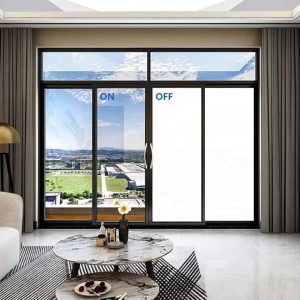
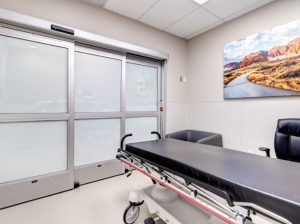
Smart Film Privacy Glass changes from clear to opaque at the touch of a button. This provides immediate visual separation without using traditional blinds or curtains.
It can be considered for:
Home offices
Glass partitions
Bathrooms
Bedrooms with internal glass
Entrance areas
Meeting rooms
Clinics and commercial spaces
When clear, the glass maintains a more open appearance. When switched to opaque, it creates immediate privacy.
Smart Film is different from a conventional blind. It does not provide the same decorative fabric finish or adjustable slat control. Instead, it is intended for homeowners and businesses that want a modern, streamlined privacy solution.
Because the existing Smart Film page already targets that service directly, this blog should only introduce it as one possible option rather than competing for the same keyword.
7. Reduce Unwanted Gaps With Made-to-Measure Blinds
A privacy blind only works properly when it fits the window.
Ready-made blinds are produced in standard sizes. If the window is slightly wider, narrower or uneven, the finished blind may leave noticeable gaps.
Gaps can be especially problematic in:
Bedrooms
Bathrooms
Ground-floor rooms
Street-facing windows
Windows close to neighbouring properties
Rooms used after dark
Made-to-measure blinds are produced for the dimensions of the individual window. This helps create more consistent coverage and a cleaner overall finish.
Ace Blinds provides free home measuring so details such as recess depth, handles, tiles and opening mechanisms can be considered before the blind is made.
Professional fitting also helps ensure that the blind is positioned correctly and operates as intended.
Best Privacy Blinds for Different Rooms
The right privacy solution depends on how each room is used.
Room or window | Main privacy concern | Options to consider |
Street-facing living room | Passers-by seeing inside | Venetian, faux wooden or vertical blinds |
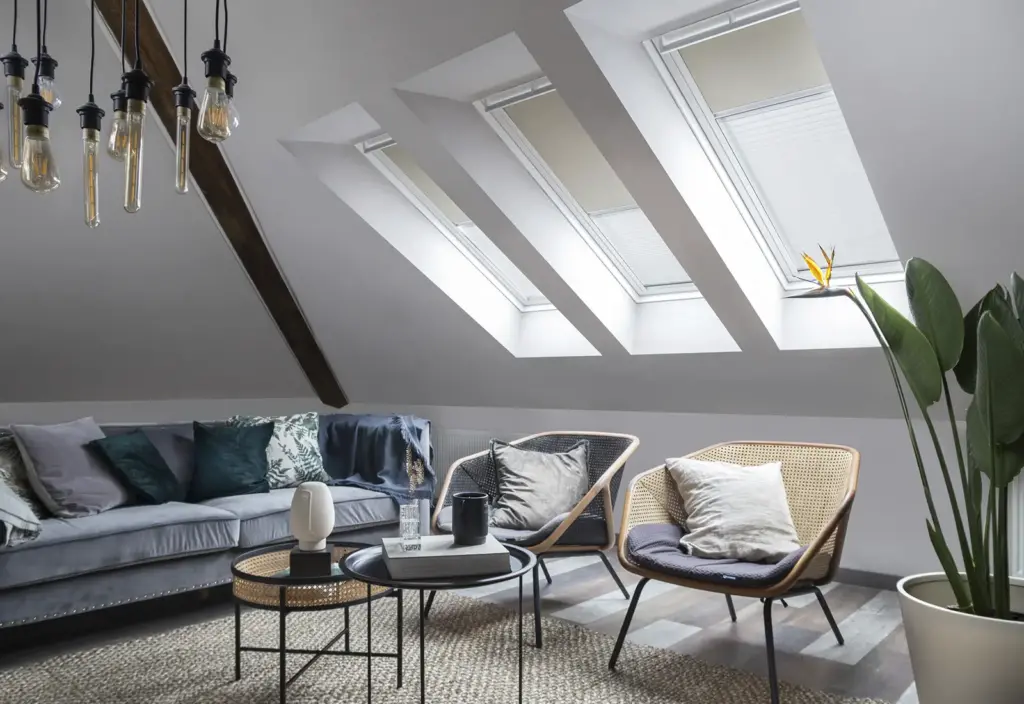
Bedroom | Evening privacy and unwanted light | Roller or VELUX blinds |
Bathroom | Dependable privacy and suitable material | Faux wooden or suitable roller blinds |
Kitchen | Privacy with easy maintenance | Faux wooden, Venetian or suitable roller blinds |
Patio doors | Large area of exposed glass | Vertical blinds |
uPVC glazed doors | Coverage that moves with the door | Perfect Fit blinds |
Home office | Privacy and screen-glare control | Venetian, vertical or Smart Film |
Roof window | Overhead visibility and light | VELUX blinds |
Glass partition | Privacy when required | Smart Film Privacy Glass |
These recommendations are starting points. The final choice should account for the window, room conditions and viewing angle.
Privacy Blinds for Street-Facing Windows
Street-facing windows create one of the most common privacy challenges.
Keeping a blind fully closed all day may solve the visibility problem, but it can also remove valuable daylight. The better solution is often a blind that allows the coverage to be adjusted.
Venetian and faux wooden blinds can be angled to reduce the direct view into the room. Vertical blinds provide similar flexibility for larger windows.
When positioning slats, consider where people outside are likely to be standing. The correct angle for a ground-floor pavement may differ from the angle needed for an overlooked upstairs window.
Check the result from outside during both daylight and evening conditions. A setting that appears private from inside may still leave the room visible from the pavement.
For the strongest privacy after dark, adjustable blinds should normally be closed completely.
Daytime Privacy and Evening Privacy Are Different
One of the most common mistakes is assuming that a blind will provide the same level of privacy throughout the day.
Light-filtering fabrics and partially open slats can work well during daylight. They reduce direct visibility while keeping the room brighter.
Once the interior lights are switched on, the balance changes. Silhouettes, movement and room details may become more visible from outside.
For evening privacy:
Close adjustable slats fully
Lower roller blinds completely
Check for gaps around the window
Avoid relying on light-filtering fabric alone
Look at the window from outside after dark
Consider layering window coverings where appropriate
Privacy should be assessed from both sides of the glass. Looking out from the room does not always show what someone outside can see.
Common Privacy Mistakes to Avoid
Choosing only by appearance
A blind may look ideal in a photograph but fail to provide the coverage or adjustability the room needs.
Assuming sheer fabric provides evening privacy
Some lighter fabrics may work during the day but reveal silhouettes when the room is illuminated at night.
Ignoring side gaps
Small gaps may be acceptable in a living room but frustrating in a bedroom or bathroom.
Using one blind style throughout the house
Consistent colours can connect different rooms, but each space may require a different privacy solution.
Forgetting how doors open
Blinds fitted to glazed doors must not obstruct handles or make access difficult.
Not checking the outside view
Always assess privacy from the pavement, garden or neighbouring viewing angle as well as from inside.
Treating privacy and darkness as the same thing
A room can be private without being completely dark. Adjustable blinds can often provide a better balance between privacy and daylight.
How Ace Blinds Helps Derry Homeowners Choose
Homeowners do not need to decide on a particular blind before asking for advice.
Start by explaining the privacy problem. Is the room visible from the road? Does a neighbouring window overlook the property? Is the bedroom too bright? Does a patio door need flexible coverage?
Ace Blinds can then assess:
The size and shape of the window
The viewing angle from outside
How much daylight the room needs
Whether adjustable or complete coverage is preferred
Which materials suit the room
How the window or door operates
Which colours and finishes complement the interior
The service includes free home measuring, free estimates, made-to-measure production and professional fitting.
You can also view examples in the Ace Blinds gallery before arranging your measurement.
Frequently Asked Questions
Which blinds provide the best privacy?
The best option depends on the room and the required level of control. Venetian, faux wooden and vertical blinds offer adjustable privacy. Roller blinds provide solid fabric coverage when lowered.
Can blinds provide privacy without blocking daylight?
Yes. Adjustable slats or louvres can reduce the direct view into a room while still allowing daylight through. The result depends on the window position and viewing angle.
What blinds work best for a street-facing living room?
Venetian, faux wooden and vertical blinds are practical options because they can be adjusted during the day and closed more fully at night.
Do blackout blinds provide privacy?
Blackout fabrics provide solid coverage when fully lowered. However, privacy can still be affected by gaps around the edges, so accurate measuring and fitting are important.
Which privacy blinds are suitable for bathrooms?
Faux wooden blinds and suitable roller blinds may be considered. The chosen material should be appropriate for the room’s moisture and condensation levels.
Can Smart Film be installed in a home?
Yes. Smart Film Privacy Glass can be used in residential spaces, including bathrooms, home offices, internal partitions and suitable exterior windows.
Does Ace Blinds provide free measuring?
Yes. Ace Blinds offers free home measuring and free estimates across Derry and the surrounding North West.
Improve Privacy Without Losing the Room You Love
Good privacy should make your home feel more comfortable—not permanently dark or closed off.
The right blinds can give you control over what people see, how much daylight enters and how the room feels at different times of day.
Ace Blinds supplies made-to-measure privacy solutions for street-facing windows, bedrooms, bathrooms, patio doors, uPVC windows, roof windows and home offices.
View Ace Blinds Derry on Google, request a free estimate or contact Ace Blinds to discuss the privacy needs of your home.