Ace Blinds Secrets to Smarter Light Control
Natural light can make a room feel brighter, more welcoming and more spacious. However, uncontrolled daylight can also create glare on screens, disturb sleep and make parts of a room uncomfortable at particular times of day.
The solution is not always to block the window completely.
Smarter light control means deciding how much daylight enters, where it falls and whether it should be softened, redirected or reduced. The right blind allows a room to adapt as the light changes instead of remaining permanently open or closed.
A living room may need reduced glare around the television. A home office needs comfortable screen visibility. A bedroom may require stronger light reduction, while a kitchen often benefits from keeping as much useful daylight as possible.
Ace Blinds supplies and professionally fits made-to-measure blinds for homes and businesses across Derry and the North West. This guide explains how different blind styles can help you manage daylight without compromising how the room looks or functions.
What Smarter Light Control Means
Light control is not the same as simply making a room dark.
Before choosing blinds, decide what you want to achieve.
Filtering light
Light-filtering blinds soften direct daylight while allowing the room to remain reasonably bright. They can be useful in living rooms, kitchens and home offices.
Redirecting light
Adjustable slats or louvres can change the direction of daylight. This can help move bright light away from televisions, desks and seating areas.
Dimming the room
Dimout fabrics reduce the amount of light entering without creating the same level of darkness as blackout material.
Blocking more light
Blackout fabric prevents light from passing directly through the material. It can be considered for bedrooms, nurseries and rooms used by shift workers.
The correct solution depends on the window, room and time of day. A blind that works well in a bright kitchen may not provide enough control for a bedroom.
Start With the Direction of the Window
The position of a window affects when direct daylight enters the room.
East-facing windows
These often receive brighter morning light. This can be welcome in a kitchen but disruptive in a bedroom.
West-facing windows
These may receive stronger afternoon or evening light. Glare can become a problem in living rooms and home offices later in the day.
South-facing windows
These can receive more direct daylight across the day. Adjustable blinds may help the room respond as the sun moves.
North-facing windows
These generally receive softer natural light. Heavy blinds or dark fabrics may remove more daylight than necessary.
The surrounding buildings, trees and window size will also affect the result. Direction is a useful starting point, but the actual room should still be assessed at different times of day.
1. Use Venetian Blinds to Redirect Daylight
Venetian blinds provide flexible light control through adjustable horizontal slats.
Instead of raising or lowering the entire blind, the slats can be tilted to change how daylight enters the room. This makes Venetian blinds useful where lighting conditions change throughout the day.
They may work well in:
Home offices
Living rooms
Kitchens
Bedrooms
Dining rooms
Street-facing rooms
If sunlight is falling directly onto a computer screen, the slats can be adjusted to redirect the light without completely darkening the room. In a living room, they can reduce glare around a television while maintaining useful daylight elsewhere.
Small adjustments can make a noticeable difference. Fully open slats allow more light through, while a partial tilt softens and redirects it.
The correct angle depends on the direction of the window and the position of the screen, furniture or workspace.
2. Manage Large Windows With Vertical Blinds
Large windows and patio doors bring a significant amount of natural light into a room. However, they can also create stronger glare and uneven brightness.
Vertical blinds use adjustable louvres that can be tilted to manage incoming light. They can also be drawn aside when the full window or doorway needs to be opened.
They are particularly suitable for:
Patio doors
Sliding doors
Wide living-room windows
Conservatories
Offices
Dining areas
The louvres allow more control than a single solid covering. One angle may reduce glare while keeping the room bright, while another provides stronger shade.
Vertical blinds can be especially helpful in rooms used for several purposes. A kitchen-dining area may need full daylight during the morning, glare control during the afternoon and greater privacy in the evening.
Accurate measuring is important for wide installations. The blind must hang correctly and move smoothly across the complete opening.
3. Select the Right Roller-Blind Fabric
Roller blinds provide straightforward light control using a continuous piece of fabric.
Their performance depends heavily on the chosen material.
Light-filtering roller blinds
These soften direct daylight and reduce harsh brightness without making the room completely dark.
They may suit:
Living rooms
Kitchens
Home offices
Hallways
Dining rooms
Dimout roller blinds
These reduce more incoming light and create a softer, less brightly illuminated room. They can be useful where stronger glare reduction is required.
Blackout roller blinds
Blackout material prevents light from passing through the fabric. It is commonly considered for:
Bedrooms
Children’s rooms
Nurseries
Media rooms
Rooms used by shift workers
Blackout describes the fabric rather than the entire installation. Light may still enter around the sides, particularly if the blind sits inside the window recess. Accurate measuring and the fitting position affect the final result.
The fabric colour also influences how the blind feels within the room, but the material construction is more important than colour alone when deciding how much light it will control.
4. Combine Light Control With Character
Faux wooden blinds provide adjustable light control while introducing a more structured finish.
Their horizontal slats can be tilted throughout the day, giving homeowners control over brightness, glare and privacy.
They may work particularly well in:
Living rooms
Kitchens
Bathrooms
Bedrooms
Home offices
A lighter finish can help maintain a bright appearance, while darker tones create stronger contrast and may make the window more prominent.
The slats also cast defined lines of light and shade into the room. Some homeowners enjoy this effect as part of the interior design, while others prefer the softer appearance of a light-filtering fabric.
The choice depends on whether you want the blind to blend quietly into the room or become a stronger design feature.
5. Control Light on uPVC Windows and Doors
Conventional blinds may sit away from the glass on uPVC windows and doors. This can allow more light around the edges or cause the blind to move when the door opens.
Perfect Fit blinds are designed for many compatible uPVC windows and glazed doors. The blind sits within its own frame and moves with the window or door.
They can be considered for:
French doors
Glazed entrance doors
Conservatory windows
Tilt-and-turn windows
uPVC bedroom windows
Utility-room doors
This integrated fitting can help maintain a clean appearance and avoid loose fabric moving around the glass.
Perfect Fit products are available with different compatible blind styles, allowing light control to be selected according to the room.
Compatibility depends on the window system, glazing depth and handle position. These details should be checked before ordering.
6. Manage Overhead Daylight From Roof Windows
Roof windows bring daylight directly into loft rooms, extensions and upper-floor spaces. Because of their angle, sunlight can feel particularly bright at certain times.
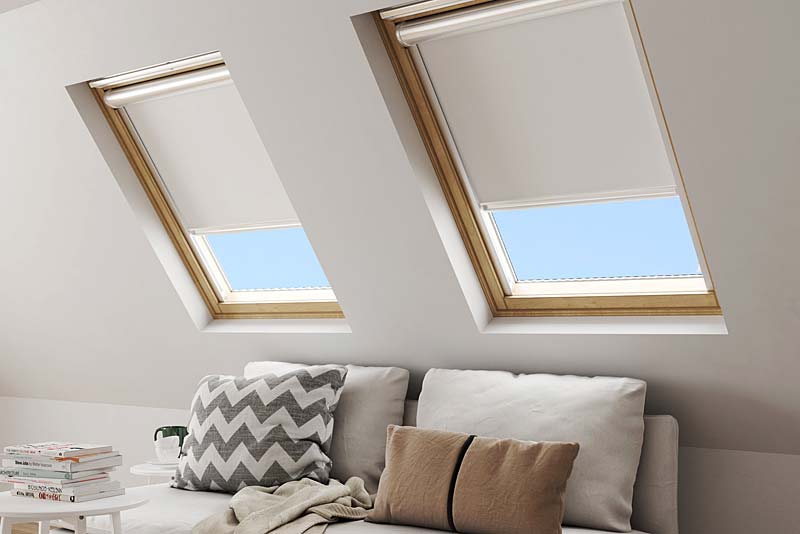
VELUX blinds are designed for suitable roof windows and skylights. They remain positioned against the angled glass rather than hanging away from the window.
Roof-window blinds can help with:
Early-morning bedroom light
Glare in loft home offices
Strong daylight in kitchen extensions
Overhead brightness in upstairs bathrooms
Light control in converted attic spaces
The required level of control depends on how the room is used. A loft bedroom may need a stronger light-reducing option, while an upstairs office may benefit from adjustable or softer coverage.
The roof-window model and dimensions should be confirmed before choosing a blind.
7. Improve Light Control With a Made-to-Measure Fit
Even the correct blind style may underperform if it does not fit the window properly.
A blind that is too narrow can leave unwanted gaps. A blind that is too wide may not sit inside the recess or operate smoothly. Handles and window-opening mechanisms can also affect the fitting position.
Made-to-measure blinds are produced for the dimensions of the individual window.
This can provide:
More consistent coverage
Better alignment
Fewer unnecessary gaps
Smoother operation
A cleaner finished appearance
More appropriate positioning around handles
Ace Blinds provides free home measuring so the width, drop, recess depth and surrounding fixtures can be checked before the blind is produced.
Professional fitting helps ensure that the completed blind operates properly and provides the intended level of light control.
Best Blinds for Light Control by Room
Room or area | Main lighting problem | Blinds to consider |
Living room | Television glare and changing daylight | Venetian, vertical or roller blinds |
Bedroom | Early daylight and evening lighting | Blackout roller or VELUX blinds |
Home office | Screen glare | Venetian or light-filtering roller blinds |
Kitchen | Brightness without losing daylight | Venetian, roller or faux wooden blinds |
Bathroom | Privacy and adjustable daylight | Faux wooden or suitable roller blinds |
Patio doors | Strong light across a wide opening | Vertical blinds |
Conservatory | Large areas of glass | Vertical or compatible Perfect Fit blinds |
uPVC door | Light around glazed panels | Perfect Fit blinds |
Loft room | Overhead sunlight and glare | VELUX blinds |
Media room | Reduced light around a screen | Blackout or dimout roller blinds |
These recommendations provide a starting point. Window direction, glass size and room layout must also be considered.
How to Reduce Screen Glare Without Darkening the Room
Screen glare is common in home offices and living rooms. Closing a solid blind may solve the immediate problem, but it can leave the rest of the room unnecessarily dark.
A more flexible approach is to redirect or soften the light.
Consider:
Tilting Venetian slats away from the screen
Adjusting vertical louvres as the sunlight moves
Using light-filtering roller fabric
Positioning the desk at an angle to the window
Moving reflective screens away from direct sunlight
Choosing adjustable coverage for different times of day
The position of the desk or television matters as much as the blind. If the screen directly faces a bright window, even a suitable blind may need to remain closed more often.
Assess the glare from the position where the screen is actually used—not only while standing beside the window.
Light Control for Better Bedroom Comfort
Bedrooms need a different approach from living areas.
The aim is often to reduce early daylight and external lighting without making the room feel heavy during the day.
A blackout roller blind may be suitable when stronger light reduction is required. For roof windows, a compatible VELUX blind can help control overhead morning light.
Before choosing bedroom blinds, consider:
Which direction the window faces
When direct daylight enters
Whether outside lighting affects the room
Whether children sleep during brighter hours
Whether the room is used by a shift worker
How much daylight is wanted during the day
Blackout fabric can reduce the light passing through the material, but gaps around the edges still matter. Professional measuring can help identify the most suitable fitting position.
Using Light to Change the Mood of a Room
Blinds can influence the atmosphere of a room as well as its practical brightness.
Softly filtered daylight can make a living room feel calmer. Stronger natural light may suit a kitchen or workspace. A darker bedroom can create a more restful evening atmosphere.
Colour also affects how the light feels.
Pale blinds can keep a space looking light and open. Warmer neutrals may soften the appearance of bright daylight. Darker blinds create stronger contrast and may make the window a more noticeable design feature.
Think about how the room should feel:
Bright and active
Soft and relaxed
Private but not dark
Comfortable for screen use
Darker for sleeping
Flexible throughout the day
The best light control is adaptable rather than fixed.
Common Light-Control Mistakes Using blackout fabric in every room
Blackout material is useful where strong light reduction is required, but it may remove more daylight than necessary in kitchens, hallways and living areas.
Choosing based only on colour
The construction and opacity of the fabric are more important than colour alone when deciding how much light will pass through.
Ignoring the direction of the window
A blind selected without considering when direct sunlight enters may not solve the actual problem.
Forgetting the view from the sofa or desk
Glare must be assessed from where the television or computer is used.
Assuming light filtering means privacy at night
Some lighter fabrics soften daylight but may reveal silhouettes after dark when the room is illuminated.
Buying the closest standard size
Poorly fitted blinds can leave gaps that reduce light control.
Treating every room the same
Bedrooms, kitchens, offices and living rooms have different lighting requirements.
How Ace Blinds Helps You Choose
You do not need to know exactly which blind or fabric you require before arranging a measurement.
Start by explaining the problem:
Is the bedroom too bright in the morning?
Does sunlight reflect from the television?
Is the home-office screen difficult to see?
Does a large window make the room uncomfortable?
Do you want privacy without losing all daylight?
Ace Blinds can then assess the window, room and required level of control.
The service includes:
Free home measuring
Free estimates
Made-to-measure blinds
Advice on suitable styles and fabrics
Professional fitting
Options for homes and businesses
You can view previous work in the Ace Blinds gallery before arranging your measurement.
Frequently Asked Questions Which blinds provide the best light control?
Venetian and vertical blinds provide adjustable directional control. Roller blinds offer different levels of coverage depending on whether light-filtering, dimout or blackout fabric is chosen.
What blinds help reduce screen glare?
Venetian, vertical and light-filtering roller blinds can help reduce or redirect glare without necessarily darkening the entire room.
Are blackout blinds completely lightproof?
Blackout fabric prevents light from passing through the material. However, light may still enter around the edges depending on the fitting position.
Which blinds let in the most daylight?
Blinds that can be fully raised or drawn aside expose more of the glass. Venetian and vertical blinds also allow daylight to be adjusted using their slats or louvres.
What blinds work best for a bright bedroom?
Blackout roller blinds or suitable VELUX blinds may be considered, depending on the window type and required level of light reduction.
Can Ace Blinds measure the windows?
Yes. Ace Blinds provides free home measuring and free estimates across Derry and the North West.
Take Control of Your Natural Light
The right blinds should give you more than a choice between fully open and completely closed.
They should help you soften bright daylight, reduce screen glare, create a darker bedroom and change the room as the light moves throughout the day.
Ace Blinds supplies and professionally fits made-to-measure light-control solutions for living rooms, bedrooms, kitchens, home offices, patio doors and roof windows.
View Ace Blinds Derry on Google, request a free estimate or contact Ace Blinds to discuss the lighting needs of your room.