Can New Blinds Cut Bills? Ace Blinds Explains
Energy bills are influenced by many parts of a home, including its heating system, glazing, insulation, ventilation and how the household uses energy.
However, correctly selected and fitted blinds may help reduce the amount of heat lost through windows during colder weather. They can also limit direct sunlight entering a room during warmer periods, potentially reducing the need for fans or other cooling.
The honest answer is that new blinds cannot guarantee a specific saving on your bill. The result will vary between properties. A well-insulated home with modern glazing will behave differently from an older property with single glazing, draughts or large areas of glass.
What blinds can provide is another layer of control between the room and the window. When used at the right time, they can help manage heat, sunlight and comfort throughout the year.
Ace Blinds supplies and professionally fits made-to-measure blinds across Derry and the North West. This guide explains what blinds can realistically do, which options may help and how to use them more effectively.
Can Blinds Reduce Energy Bills?
Blinds may contribute to lower energy use, but they should not be treated as a replacement for proper glazing, insulation or draught-proofing.
During colder weather, a closed blind creates an additional barrier between the warm room and the colder glass. Depending on the product, fabric and fit, this may slow some heat movement through the window.
During warmer weather, closing blinds before or while direct sunlight is hitting the glass can limit solar heat entering the room.
UK Government window guidance notes that well-fitting curtains and blinds can reduce heat loss through a window when drawn at dusk. It also recommends keeping coverings open on sunny winter days to benefit from warmth from the sun.
This means the answer depends on two things:
Choosing a suitable blind
Using it at the correct time
A good blind left open throughout every cold evening will not provide the same benefit as one closed before the room begins losing warmth through the glass.
How Heat Moves Through Your Windows
Windows affect room temperature in two main ways.
Heat escaping during colder weather
When the inside of a home is warmer than the outside, heat moves towards colder surfaces. Windows can become one of the areas where heat leaves the room.
A closed blind creates another layer between the warm room and the glass. Some blind designs and materials create a more effective barrier than others.
Sunlight heating rooms
Direct sunlight passing through glass can increase the temperature of a room. This can be useful during a sunny winter day, but uncomfortable during warmer weather.
Closing blinds while direct sunlight is hitting a window can help limit this solar heat gain.
Blinds do not repair faulty windows or seal structural gaps. If cold air is entering through cracks around the frame, proper draught-proofing or repairs may be required.
How Blinds May Help in Colder Weather
The strongest winter benefit normally comes from closing blinds before or around dusk.
Once the sun goes down and the outside temperature falls, uncovered windows can become colder surfaces. Closing a blind creates additional separation between the room and the glass.
For better results:
Close blinds at dusk
Make sure the blind covers the window properly
Avoid large, unnecessary gaps
Use all suitable blinds rather than only those in occupied rooms
Open blinds when useful winter sunlight reaches the window
Keep radiators and heaters unobstructed
Reopen blinds during the day when solar warmth is beneficial
The balance matters. Keeping every blind closed throughout a sunny winter day may block useful natural heat and increase the need for artificial lighting.
Open blinds when sunlight is warming the room, then close them as daylight fades.
How Blinds May Help During Warmer Weather
Blinds can also help limit the amount of direct sunlight entering a room during warmer periods.
The Energy Saving Trust advises closing blinds and curtains when the sun is shining through a window, then opening them again after the sun has moved away.
Timing is important. Closing the blind after the room has already become hot is less effective than limiting the direct sunlight earlier.
During warmer weather:
Close blinds on windows receiving direct sunlight
Adjust slats to reduce sunlight without blocking every bit of daylight
Reopen blinds after the sun moves away
Ventilate when the outside temperature is cooler, if safe
Focus first on the windows receiving the strongest sunlight
South- and west-facing rooms may need more attention at certain times, but surrounding buildings and trees can change how much sun reaches each property.
Which Ace Blinds May Help Manage Heat?
Not all blinds provide the same level of coverage or control. Product choice should be based on the window, room and main problem.
Roller Blinds for Continuous Fabric Coverage
Roller blinds use a continuous piece of fabric to cover the window.
When lowered, they can create a simple barrier between the room and the glass. Their performance depends on the fabric, opacity, fitting position and gaps around the edges.
Roller blinds can be considered for:
Bedrooms
Living rooms
Kitchens
Home offices
Smaller windows
Rooms needing straightforward coverage
Ask about available fabric options when heat or strong sunlight is a priority. A light-filtering fabric will behave differently from a heavier dimout or blackout option.
Blackout fabric prevents light from passing directly through the material, but it does not automatically make the entire window airtight or thermally insulated. Gaps around the edges still affect the result.
Faux Wooden Blinds for Adjustable Control
Faux wooden blinds use adjustable horizontal slats.
During colder weather, the slats can be closed in the evening to provide additional coverage. On sunny winter days, they can be opened to allow light and warmth into the room.
During warmer weather, the slats can be tilted to redirect strong sunlight while retaining some daylight.
They may suit:
Living rooms
Kitchens
Bathrooms
Home offices
Street-facing windows
Because there are small spaces between the slats, faux wooden blinds do not provide the same continuous coverage as a solid fabric blind. Their strength is flexible control rather than creating a sealed layer.
Venetian Blinds for Managing Sunlight
Venetian blinds also provide adjustable light and solar control.
The slats can be angled to reduce direct sunlight falling on floors, furniture, screens and seating areas. This allows homeowners to respond as the sun moves rather than keeping the window completely covered.
Venetian blinds can be useful in:
Home offices
Living rooms
Kitchens
Dining rooms
Bedrooms
They are particularly practical where glare and summer sunlight are greater concerns than maximum winter insulation.
Vertical Blinds for Large Windows and Patio Doors
Large windows and patio doors can expose a room to significant areas of cold glass in winter and direct solar heat in warmer weather.
Vertical blinds provide flexible coverage for wider openings. Their louvres can be tilted, fully closed or drawn aside.
They may help manage:
Direct sunlight across wide windows
Glare in living rooms
Patio-door coverage
Conservatories
Dining areas
Commercial spaces
The louvres have small gaps between them, so performance depends on how fully they close, the fabric and the fitting.
Their main advantage is adjustable coverage across a large glazed area.
Perfect Fit Blinds for Glazed Doors and uPVC Windows
Perfect Fit blinds sit closely within compatible uPVC windows and doors.
Because the blind moves with the window or door, it can provide neat coverage without loose fabric hanging away from the glass.
Perfect Fit blinds may be considered for:
Glazed entrance doors
French doors
Conservatory windows
uPVC bedroom windows
Utility-room doors
Their energy performance depends on the compatible blind type and fabric selected. However, the close-to-glass fitting can provide a tidy solution where a conventional blind would leave awkward coverage.
VELUX Blinds for Roof Windows
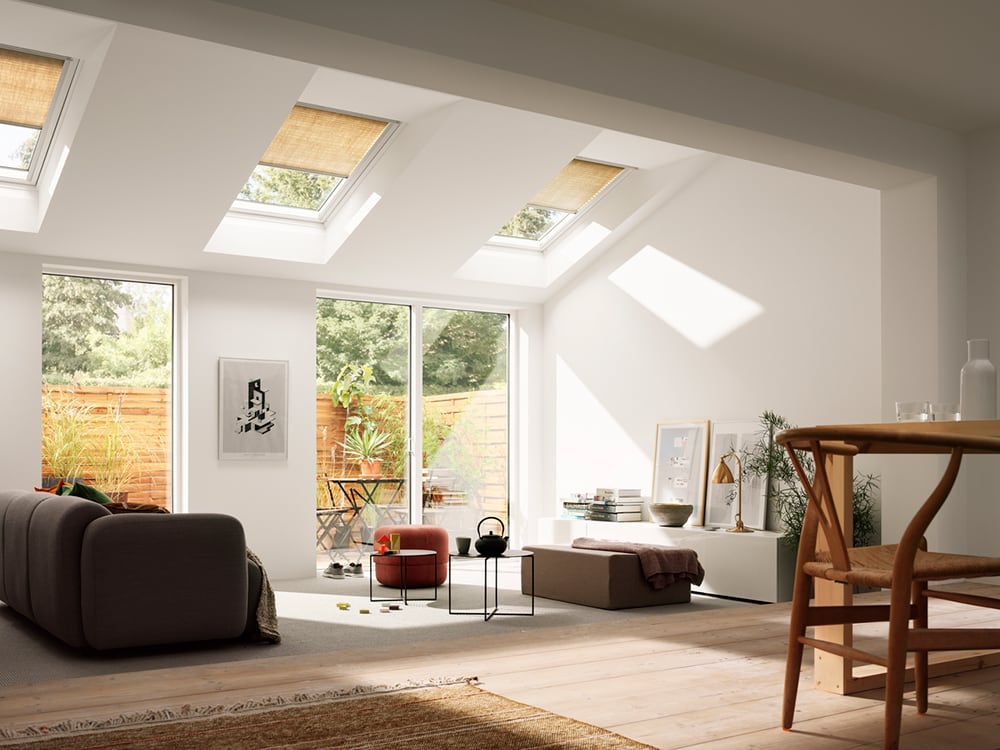
Roof windows can receive direct overhead sunlight and may contribute to uncomfortable temperatures in loft rooms and extensions.
VELUX blinds are designed for compatible skylights and roof windows. They remain positioned against the angled glass rather than hanging away from it.
They can help manage:
Strong sunlight in loft bedrooms
Overhead heat gain in extensions
Brightness in attic home offices
Evening coverage during colder weather
The correct product depends on the window model, room and required level of light or heat control.
Why Made-to-Measure Fitting Matters
The effectiveness of any blind depends partly on how well it covers the window.
A blind that is too narrow may leave large gaps. One that is too wide may not sit properly within the recess. Handles, tiles and window-opening mechanisms can also affect the fitting position.
Made-to-measure blinds are produced for the individual window.
This may provide:
More consistent coverage
Fewer unnecessary gaps
Better alignment
A cleaner finish
Smoother operation
Appropriate clearance around handles
Ace Blinds provides free home measuring so the width, drop, recess depth and surrounding fittings can be checked before production.
Professional fitting cannot make a blind airtight, but it can avoid the poor coverage caused by an incorrectly sized product.
How to Use Blinds More Efficiently in Winter
Buying new blinds is only part of the solution. How they are used matters just as much.
Open blinds on sunny windows
Useful winter sunlight can help warm a room naturally. Open the blinds when direct sunlight reaches the window.
Close blinds at dusk
Close them before the glass becomes significantly colder and the room begins losing more warmth.
Keep radiators clear
Do not allow blinds or curtains to obstruct radiators. Covering a heat source may prevent warmth from circulating efficiently through the room.
Use blinds throughout the home
Heat can move between rooms. Closing suitable blinds throughout the home may be more useful than only closing them in the living room.
Check for draughts separately
Blinds will not repair gaps around the frame. If you can feel cold air entering, investigate proper draught-proofing.
How to Use Blinds More Efficiently in Summer Close them before the room overheats
If strong sunlight reaches the window every afternoon, close or adjust the blind before the room becomes uncomfortable.
Prioritise sunny windows
You do not need to close every blind. Focus on the side of the home currently receiving direct sunlight.
Adjust slats where possible
Venetian, faux wooden and vertical blinds can reduce direct sun while retaining some daylight.
Reopen blinds later
Once the sunlight has moved away, reopen the blind to restore daylight and allow the room to feel less enclosed.
Ventilate at the right time
Open windows when the air outside is cooler than the air inside, provided it is safe. Avoid blocking essential ventilation.
What Determines Whether Your Bills Change?
No responsible blind company should promise an exact saving without detailed evidence about the property.
Possible savings depend on:
The size and number of windows
Single, double or triple glazing
The condition of frames and seals
Blind design and fabric
How closely the blind fits
When the blinds are opened and closed
The heating system
Thermostat settings
Wall, roof and floor insulation
Local weather
Household energy habits
Current energy tariffs
A home with extensive single glazing may respond differently from one with modern double glazing. A household that already closes heavy curtains every evening may notice less change than one leaving windows uncovered.
New blinds should therefore be viewed as a supporting energy-efficiency measure, not a guaranteed bill-cutting product.
Blinds Are Not a Substitute for Draught-Proofing
If cold air is entering through gaps around a window, the main issue is uncontrolled ventilation rather than heat transfer through the glass.
The Energy Saving Trust’s draught-proofing guidance explains that sealing unwanted gaps can reduce heat loss. It also warns that essential ventilation must remain open.
Do not block:
Trickle vents
Extractor fans
Wall vents
Air bricks
Ventilation required for fires or flues
Good ventilation is important for controlling moisture and maintaining indoor air quality, particularly in kitchens and bathrooms.
Blinds can work alongside draught-proofing, efficient glazing, insulation and sensible heating controls. They should not replace those measures.
Blinds for Different Rooms
Room or area | Main energy concern | Blinds to consider |
Living room | Evening heat loss and television glare | Roller, Venetian or faux wooden blinds |
Bedroom | Night-time coverage and morning sunlight | Roller or VELUX blinds |
Kitchen | Useful daylight and changing sunlight | Venetian, faux wooden or roller blinds |
Home office | Glare and afternoon solar heat | Venetian or light-filtering roller blinds |
Patio doors | Large area of exposed glass | Vertical blinds |
Conservatory | Strong sunlight across multiple windows | Vertical or compatible Perfect Fit blinds |
uPVC glazed door | Close-to-glass coverage | Perfect Fit blinds |
Loft conversion | Overhead sunlight and roof-window coverage | VELUX blinds |
The final choice depends on the window, available product specifications and how the room is used.
Common Energy-Saving Mistakes
Expecting guaranteed savings
Blinds may contribute to lower energy use, but savings cannot be guaranteed without considering the entire property.
Leaving blinds open after dark
A blind cannot provide additional evening coverage if it remains raised or open.
Keeping blinds closed on sunny winter days
This may block useful sunlight and natural warmth.
Closing every blind during summer
Focus on windows receiving direct sunlight. Other windows can remain open for daylight.
Ignoring poor window seals
Blinds do not fix draughts or damaged frames.
Obstructing radiators
Long coverings hanging in front of radiators can interfere with heat circulation.
Blocking ventilation
Never cover vents required for indoor air quality or safe appliance operation.
Choosing by appearance alone
The fabric, opacity, fit and operation affect performance as much as colour or pattern.
Frequently Asked Questions
Can blinds genuinely reduce energy bills?
They may help reduce heating or cooling demand by adding coverage at windows and limiting direct sunlight. However, the financial saving depends on the property, blind and household behaviour.
Which blinds are most energy efficient?
Performance depends on the design, fabric, fit and how the blind is used. Continuous fabric blinds can provide solid coverage, while adjustable slats provide flexible solar control.
Do blackout blinds keep heat in?
Blackout fabric provides solid material coverage and blocks light passing through the fabric. Its thermal performance depends on the product specification, installation and gaps around the edges.
Should blinds be open or closed in winter?
Open them when useful sunlight is warming the room. Close them at dusk to provide additional coverage against colder windows.
Should blinds remain closed all day in summer?
Close blinds on windows receiving direct sunlight. They can be reopened after the sun moves away.
Can blinds stop draughts?
Blinds may reduce the feeling of cold near a window but do not repair structural gaps or faulty seals. Proper draught-proofing may be required.
Does Ace Blinds provide free measuring?
Yes. Ace Blinds provides free home measuring and free estimates across Derry and the North West.
Find the Right Blinds for a More Comfortable Home
New blinds are not a magic solution for high energy bills. However, the right product, measured correctly and used at the right time, may help your home retain warmth in colder weather and manage direct sunlight during warmer periods.
Ace Blinds can assess your windows, explain the available blind and fabric options and provide a free estimate.
View Ace Blinds Derry on Google, request a free estimate or contact Ace Blinds to discuss your home.