
Clear or Private? Ace Blinds Smart Film Guide
Imagine having a bright glass meeting room, bathroom partition or home office that can become private when needed—without permanently hiding the glass behind curtains or conventional blinds.
That is the appeal of Smart Film Privacy Glass. It allows compatible glass to change between a clearer state and a frosted private state using an electrical control.
For homeowners, clinics, offices and educational premises across Derry and the North West, this can provide a cleaner and more flexible alternative to permanent frosting. However, Smart Film is not automatically the right solution for every window.
The glass, location, electrical requirements, viewing angle and level of privacy all need to be assessed. It is also important to understand that a private or opaque appearance does not necessarily mean complete darkness.
This Ace Blinds Smart Film guide explains how the technology works, where it may be useful and what to ask before requesting an installation.
What Is Smart Film Privacy Glass?
Smart Film is an electrically controlled layer that changes the appearance of compatible glass.
Ace Blinds describes its Smart Film Privacy Glass as switchable technology that changes from clear to opaque at the touch of a button. This gives occupants control over when people can see through the glass.
The technology is commonly used on:
Glass office partitions
Meeting-room walls
Consultation rooms
Internal glass doors
Bathroom partitions
Home offices
Classroom and training-room glass
Reception areas
Selected exterior windows
Other suitable glazed surfaces
Smart Film should not be confused with ordinary adhesive privacy film. Standard frosted film remains frosted until it is physically removed. Switchable Smart Film changes state through its electrical control system.
The name can also cause confusion between Smart Film and Smart Glass. Retrofit Smart Film is normally applied to an existing suitable glass surface, while switchable Smart Glass generally incorporates the active layer within a manufactured glass unit. The exact Ace Blinds system and installation method should be confirmed during the assessment.
How Does Smart Film Switch from Clear to Private?
Many switchable privacy systems use Polymer Dispersed Liquid Crystal technology, commonly shortened to PDLC.
Within the film are tiny liquid-crystal particles. In a common PDLC configuration, applying electricity causes those particles to align, allowing more light to pass directly through the material. The glass then appears clearer.
When the electrical state changes, the particles become randomly arranged. Light is scattered rather than passing directly through, creating the familiar frosted appearance that reduces visibility through the glass.
The change can happen very quickly, making the effect feel almost instant.
The precise controls depend on the chosen system. They may include a wall switch, remote control or another compatible control method. Do not assume that every control option is included as standard. Confirm the proposed system, power supply and control arrangement when requesting a quotation.
Clear or Private: What Should You Expect?
The words “clear” and “private” are useful, but customers should understand what they mean in practice.
The clear state
In its clear state, Smart Film allows people to see through the glass. However, it may not look exactly the same as completely untreated glass.
Depending on the product, lighting and viewing angle, a slight haze may remain visible. This can be more noticeable when looking across the glass from an angle or when strong artificial light hits the surface.
If perfect optical clarity is essential for a shop display, external view or design feature, ask to see a working sample or completed installation before approving the project.
The private state
In its private state, the film scatters light and gives the glass a frosted appearance. This is designed to obscure a direct view through the panel while allowing a bright appearance.
It should not automatically be treated as blackout glass. Light can still pass through, and objects or people very close to the glass may produce a visible shadow under certain lighting conditions.
A bathroom, medical room or confidential meeting space may also require a higher level of privacy than a home-office partition. The intended use should therefore be discussed before installation.
What happens during a power cut?
Many standard PDLC systems return to their unpowered frosted state when electricity is unavailable. However, different systems and configurations exist.
Ask Ace Blinds to confirm:
Which state the proposed system uses when unpowered
What happens during a power cut
Whether continuous power is needed for the clearer state
Which controls are supplied
Where the power supply will be located
This is especially important for workplaces, clinical environments and rooms where privacy must be maintained consistently.
Where Smart Film May Work in Derry Homes
Smart Film is likely to attract homeowners who want modern interiors without losing flexibility.
Bathroom partitions
A glass bathroom partition can make a room feel larger and brighter. Smart Film may allow that glass to remain visually open when privacy is unnecessary and become frosted when the room is in use.
Bathrooms are also moisture-prone environments. The selected product, glass construction, exposed edges and electrical components must be suitable for the proposed location. This should be confirmed by the installer rather than assumed.
Smart Film is not a shortcut around correct bathroom electrical planning or ventilation.
Home offices
More homeowners now use internal glass to separate work areas without closing off natural light.
A switchable glass partition can keep a home office visually connected to the rest of the property during ordinary work. It can then become private during video calls, meetings or concentrated tasks.
Before installation, consider whether frosting the glass will provide enough visual separation or whether additional sound privacy is required. Smart Film controls visibility; it should not be assumed to soundproof an ordinary glass partition.
Internal glass doors
Internal glazed doors allow light to move between rooms, but they can create privacy problems in bedrooms, dressing areas or home offices.
Smart Film may provide a flexible solution where permanent frosting would make the glass feel closed throughout the day. Door movement, handles, cabling and the protection of electrical connections must be considered during the site assessment.
Street-facing windows
Homeowners may be interested in Smart Film for a front room, hallway or window facing a busy road.
Exterior window applications require careful assessment. The product must be suitable for the glass, location and environmental exposure. Smart Film also does not provide the same adjustable shading as a conventional blind.
If the main problem is bright sunlight, room darkness or precise daylight control, made-to-measure blinds may still be a better choice.
Open-plan interiors
Smart Film can help divide an open-plan space without permanently replacing glass with a solid wall.
This may suit larger kitchens, living spaces, extensions and work areas where occupants want both openness and occasional separation. The strongest applications are usually those with a clear reason for switching between visible and private states.
Smart Film Privacy for Offices and Meeting Rooms
Commercial environments may present an even stronger use case because the same room often needs to perform several functions.
A glass meeting room may feel open and welcoming between appointments. During a confidential discussion, interview or presentation, it may need immediate visual privacy.
Switchable Smart Film can help businesses change the function of that glass without drawing curtains or manually adjusting several blinds.
Potential commercial applications include:
Meeting rooms
Executive offices
Interview rooms
Human-resources offices
Glass reception areas
Training rooms
Shared workspaces
Internal glass partitions
Client presentation areas
Businesses should consider how often the privacy function will be used, who will control it and what should happen if the power or control system becomes unavailable.
The control location should be convenient without allowing unauthorised or accidental switching during a confidential meeting.
Smart Film for Clinics and Consultation Rooms
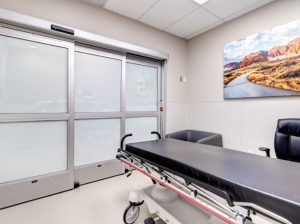
Clinics, dental practices, therapy rooms and other healthcare settings often need to balance light, openness and visual privacy.
Smart Film may be considered for internal consultation-room glass where staff want visibility at some times and discretion at others. It may also reduce the need for fabric coverings on a suitable glass partition.
However, the product should not be presented as automatically improving infection control or preventing the spread of germs. Those claims require product-specific and clinical evidence.
Healthcare decision-makers should instead assess:
Whether the private state provides sufficient visual screening
Whether shadows are visible at close range
Whether the surface and edges can be maintained appropriately
How the system fits existing cleaning procedures
Where electrical components will be located
What happens during a power interruption
Whether the glass meets the necessary building and safety requirements
Visual privacy is also different from acoustic privacy. If conversations must remain confidential, the acoustic performance of the complete partition should be assessed separately.
Smart Film in Schools and Educational Spaces
Glass walls can help schools and training facilities create bright, open interiors. They can also become distracting when students can see movement in surrounding corridors or rooms.
Smart Film may allow selected glass to become frosted during lessons, assessments, meetings or focused activities. The clearer state can then be restored when supervision, openness or shared visibility is preferred.
Possible applications include:
Classrooms with glass partitions
Libraries
Training rooms
Meeting rooms
Student-support spaces
Staff offices
Conference rooms
Schools should consider safeguarding, supervision and emergency procedures before using switchable privacy in areas where visibility is normally required.
The final decision should be based on how the space operates, not only how impressive the switching effect looks.
Smart Film, Frosted Glass or Blinds?
Each option solves privacy in a different way.
Feature | Smart Film | Permanent frosted glass | Conventional blinds |
Privacy can be changed | Yes | No | Yes |
Clear view available | Yes, subject to some possible haze | No | Yes, when opened |
Natural light in private mode | Usually remains bright | Usually remains bright | Depends on blind and position |
Adjustable light direction | Limited | Limited | Available with selected blind styles |
Blackout capability | No | No | Available with suitable products |
Requires electricity | Yes | No | Usually no |
Covers the glass visually | Minimal appearance | Permanent frosted finish | Blind remains visible |
Moving fabric or slats | No | No | Yes |
Best use | Flexible modern privacy | Permanent privacy | Privacy, shading and light control |
Smart Film is strongest when the customer genuinely needs to change between visibility and privacy.
Permanent frosting may be more straightforward when the glass never needs to be clear. Blinds may be more suitable when the priority is controlling sunlight, glare, room darkness or the direction of daylight.
Some properties may benefit from combining technologies rather than expecting one product to perform every job.
The Main Benefits of Smart Film Privacy Glass
Privacy when it is needed
The most obvious advantage is the ability to change the glass rather than cover it permanently.
This can be useful in rooms that need to feel open most of the time but private during meetings, consultations or personal use.
A clean appearance
Smart Film does not create the same visual effect as hanging curtains or blinds. This can suit contemporary interiors, glazed office partitions and minimalist renovation projects.
Retaining a bright room
The private state scatters light rather than necessarily blocking it. This can help maintain a bright appearance while reducing direct visibility.
Exact light-transmission performance depends on the product. Ask for the relevant technical information if it is important to the project.
Fewer conventional window coverings
On suitable glass, Smart Film may remove the need to install curtains or blinds solely for visual privacy.
That does not mean it replaces every benefit offered by a blind. A blind may still provide better shading, adjustable light control or room-darkening performance.
Flexible use of space
A meeting room, classroom, consultation room or home office can change function without physically covering the glass.
This flexibility is one reason Smart Film is often more commercially appealing than ordinary decorative film.
What Smart Film Does Not Automatically Do
Smart Film has a strong visual effect, which makes it easy to oversell. Property owners should understand its limitations before committing.
Smart Film should not automatically be described as:
A blackout solution
Completely invisible in its clear state
A replacement for safety glass
A soundproofing system
A security-glass upgrade
Suitable for every exterior window
Suitable for every bathroom or wet area
Maintenance-free
An adjustable sunshade
A guaranteed energy-saving product
Some switchable products may offer tested UV, heat or energy-performance benefits. Those results vary by manufacturer and specification.
If UV protection, heat reduction, energy efficiency or glare control is a deciding factor, request the product-specific technical data rather than relying on a general Smart Film claim.
What Should Be Checked Before Installation?
A site assessment should answer more than how large the glass is.
Glass suitability
The installer must establish whether the existing glass and its surface are suitable for the proposed system.
Glass type, condition, coatings, damage, seals and surrounding frame can all affect the recommendation.
Panel dimensions
Smart Film is normally prepared for the particular glass panel. Accurate measurements are therefore essential.
Large or unusually shaped areas may require a different approach. Ask whether seams, joins or separate sections will be visible.
Electrical planning
The system requires a suitable power supply and controls. Cable routes, transformers and connection points should be planned before installation begins.
Ask which parts Ace Blinds will manage and whether a qualified electrician or another contractor is required.
Control method
Decide whether a wall switch, remote control or other supported method is most practical. Commercial premises may require controls that cannot be accidentally used by visitors.
Only advertise smart-home, app or voice control if the selected Ace Blinds system specifically supports it.
Privacy expectations
View the film in both states and, where possible, under lighting similar to the proposed room.
A daytime showroom demonstration may not reveal how silhouettes appear when a bright room is viewed from a darker area at night.
Edge protection
The edges and electrical connections are important parts of a Smart Film installation. Ask how they will be finished and protected, particularly around doors, frequently touched surfaces or moisture-prone areas.
How Much Does Smart Film Cost?
Smart Film is a specialist installation, so a responsible quotation should reflect the individual project.
Price may be affected by:
Total glass area
Number of separate panels
Panel dimensions and shapes
Glass condition and accessibility
Film specification
Control system
Power-supply requirements
Cable routing
Edge finishing
Installation complexity
Whether other contractors are required
A small internal partition may require a very different installation from a full commercial meeting room or several exterior windows.
Providing photographs, approximate measurements and information about the room can help with an initial conversation. Final measurements and technical checks should be completed before the installation is confirmed.
Ace Blinds offers a free quotation service and can arrange a suitable time to assess the proposed area.
Caring for Smart Film
Follow the care instructions supplied for the installed product. Do not assume it can be cleaned in exactly the same way as ordinary glass.
General precautions may include:
Using a soft, non-abrasive cloth
Avoiding harsh chemicals
Avoiding blades, scrapers and abrasive pads
Preventing excess liquid from reaching exposed edges
Keeping electrical components dry
Not attaching tape, signs or decorations without approval
Reporting bubbles, lifting edges or control problems early
Avoiding unauthorised electrical alterations
Confirm the approved cleaning products and method with Ace Blinds after installation, especially in healthcare, education or commercial environments with formal cleaning procedures.
Questions to Ask Ace Blinds
Before accepting a quotation, ask:
Is my existing glass suitable for Smart Film?
Is the proposed system a retrofit film or another glass solution?
Which state is used when the power is off?
Will there be visible haze in the clear state?
How private will it look under daytime and night-time lighting?
Are shadows visible when someone stands close to the glass?
Which control system is included?
Who handles the electrical connection?
Are seams or joins required?
How should the film be cleaned?
What product warranty or installation cover applies?
What technical data is available for the exact product?
These questions do not weaken the sale. They help make sure the customer understands what is being installed and reduce the risk of unrealistic expectations.
Frequently Asked Questions About Smart Film
Is Smart Film completely clear?
Smart Film can provide a clear view, but a slight haze may remain depending on the product, lighting and viewing angle. It may not look identical to untreated glass.
Ask to see the proposed material operating before approving an installation where optical clarity is critical.
Does Smart Film provide complete privacy?
The frosted state is designed to obscure visibility through the glass. However, strong backlighting or a person standing close to the surface may create a perceptible shadow.
The required privacy level should be tested for bathrooms, clinics and confidential rooms.
Does Smart Film block all light?
No. Smart Film is primarily a switchable privacy solution, not a blackout blind. Its private state generally remains bright because it scatters light.
For bedrooms, presentation rooms or other areas requiring darkness, discuss suitable roller blinds or other made-to-measure options.
Does Smart Film need electricity?
Switchable Smart Film requires an electrical control system. The exact power requirements and unpowered state depend on the selected product.
These details should be confirmed during the quotation process.
Can Smart Film be installed on existing glass?
Retrofit Smart Film can be applied to many suitable existing glass surfaces. That does not mean every pane is compatible.
The glass type, condition, coatings, location and accessibility must be assessed first.
Can Smart Film be installed in a bathroom?
Some systems may be suitable for selected bathroom applications when correctly specified and installed. Moisture, edge protection, electrical safety and ventilation all require careful planning.
Never assume that a general Smart Film product is suitable for direct water exposure.
Can it replace blinds?
It can replace blinds where the only requirement is changing between a view and visual privacy.
It may not replace blinds when the customer needs blackout, adjustable shading, decorative fabric or precise control over the direction of daylight. Ace Blinds can compare Smart Film with its complete range of blinds.
Is Smart Film suitable for offices?
It can be a strong option for meeting rooms, internal offices and glass partitions that require privacy only at certain times.
Confidential rooms may also need acoustic treatment because changing the glass appearance does not automatically stop sound travelling through the partition.
How can I request a Smart Film quotation?
Visit the Ace Blinds free quote page or contact Ace Blinds with information about the property, glass and intended use.
Clear When You Want Openness, Private When You Need It
Smart Film provides something ordinary frosting cannot: the ability to change how the glass works.
That flexibility can make it valuable for Derry homes, meeting rooms, clinics, offices and educational premises. The strongest installations begin with a clearly defined privacy need, suitable glass and realistic expectations about clarity, lighting and power.
Explore Smart Film Privacy Glass from Ace Blinds or visit the business listing for Ace Blinds Derry.
To discuss a residential or commercial project, call 028 7135 8059 or request a free Ace Blinds quotation.