
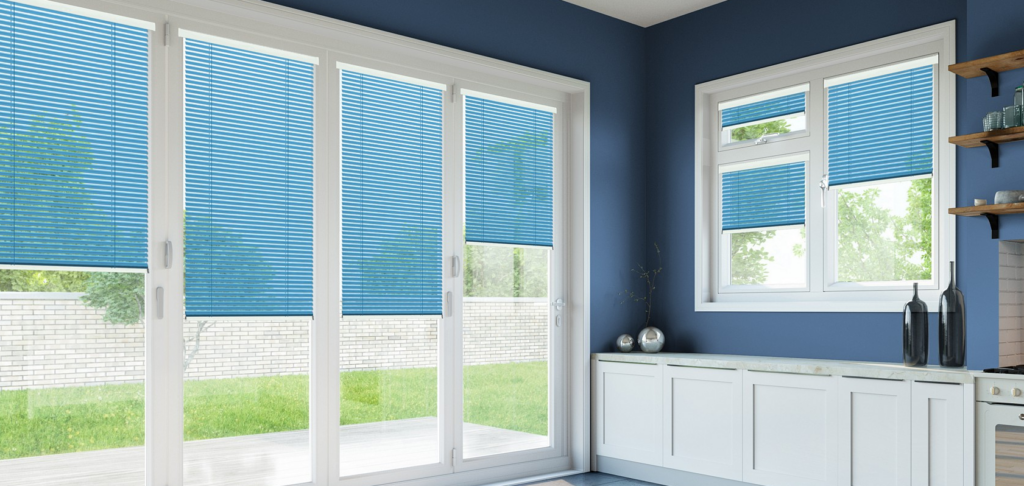
Venetian Blinds Derry Families Choose for Busy Homes
Venetian blinds Derry households pick for family rooms have to put up with a lot. Doors slam, children pull, pets jump at the window, and the blind gets opened and closed twice a day every day of the year.
A blind that looks beautiful and lasts eighteen months is not a bargain. After more than 20 years fitting window blinds across Derry and the North West, we have a fair idea which products survive a busy house and which ones do not.
What Actually Breaks on a Blind
Failures follow a pattern.
Cords and chains go first, usually because they are yanked rather than pulled. Tilt mechanisms are next, worn out by constant twisting. After that come bent slats, which is almost always a case of someone pushing through the blind to see out rather than lifting it.
Fabric failures are less common but harder to fix. Sun bleaching along one edge, and marking from damp or handling, both tend to show up around the two-year mark on cheaper materials.
Why Venetian Blinds Derry Homes Rely On Hold Up
Venetian blinds earn their place in busy rooms because of how they are built.
The slats are aluminium or a rigid composite rather than fabric, so they do not stain, fray or sag. A slat that gets bent can usually be eased back, and a badly damaged one can be replaced without rebuilding the blind.
The tilt mechanism does most of the daily work, which means the blind itself is rarely raised and lowered. Less travel means less wear on the parts most likely to fail.
Faux Wood for Rooms That Take a Beating
Where you want warmth rather than a metallic finish, faux wooden blinds give the look of timber with far better resilience.
The slats are moisture resistant, so they do not warp in a bathroom or swell in a kitchen. They wipe clean, which matters when small hands are involved.
Compared with real timber, they cost less, weigh more consistently and behave predictably over years rather than months. In a family home, that trade is worth making.
Safety in a House With Children
Durability and safety overlap more than people realise, because the components that break are often the ones a child has pulled on.
Every blind we supply meets current child safety requirements, and the safety devices are fitted as part of the installation rather than left in a bag. RoSPA’s guidance on blind cords and chains explains the risk clearly and is worth reading before you buy anything for a child’s room.
Where a room is used by toddlers, we tend to recommend wand-operated or cordless options. Removing the cord entirely is more reliable than relying on everyone in the house to use a cleat every time. The British Blind and Shutter Association’s Make it Safe campaign shows what a safe installation looks like.
Choosing Slat Width
Slat width changes both the look and the practicality of a Venetian blind.
Narrow slats suit small windows and give finer control over light, though there are more of them to clean. Wider slats suit larger windows, let more of the view through when open, and are faster to wipe down.
In a family home, wider slats usually win on maintenance alone. Fewer slats means less time spent cleaning and fewer components that can be bent.
Rooms That Need Something Else
Venetian blinds are not the answer everywhere.
Across wide patio doors, vertical blinds handle the span better and stack clear of the opening. In bedrooms where darkness matters more than tilt control, a blackout roller is the stronger choice.
Part of our job on a home visit is telling you where a different product fits better, rather than selling the same thing into every room.
Real Wood or Faux Wood in a Family Home
People often start out wanting real timber slats, and it is worth explaining the difference honestly.
Real wood is lighter, warmer in tone and lovely in a formal sitting room or a bedroom that stays dry. It is also vulnerable. Moisture makes timber move, strong sun fades it unevenly, and a bent slat cannot be eased back into shape.
Faux wood holds its shape in humid rooms, takes a wipe without marking and costs less for the same visual effect. In a hallway, kitchen, bathroom or children’s bedroom, it is the more sensible specification by some distance.
Our usual advice is to mix the two. Use real timber where the room is calm and dry, and faux wood everywhere the house is genuinely lived in. Nobody walking through notices the difference, and you spend far less time worrying about the windows.
Cleaning and Everyday Maintenance
Busy homes need blinds that clean in minutes, not hours.
A closed Venetian blind can be wiped in both directions with a damp cloth, which is far faster than working slat by slat. Aluminium and faux wood both take this treatment without marking.
Once or twice a year, check the tilt mechanism and the cord condition. A frayed cord replaced early costs almost nothing, while one that snaps in use can damage the headrail.
Fit Is Half the Battle
A blind fitted badly fails early regardless of quality.
Brackets fixed into crumbling plaster work loose. A blind sized too tightly to a recess rubs at the edges every time it moves. A blind that fouls a window handle gets forced, and forcing is what breaks things.
Every blind we supply is made to measure and fitted by our own team. We measure the recess at several points, check the handles and openings, and fix into something solid.
If you are working through the whole house, our guide to choosing blinds that last covers the buying decisions, and seven ways to transform any room helps with the look.
Book a Free Venetian Blinds Derry Measure
Venetian blinds Derry families trust are the ones specified for the room they live in, fitted into something solid and supplied with proper safety components.
Request a free estimate and we will come out, measure every window, show you slat and colour options in your own light, and give you a clear written price.